Product Description
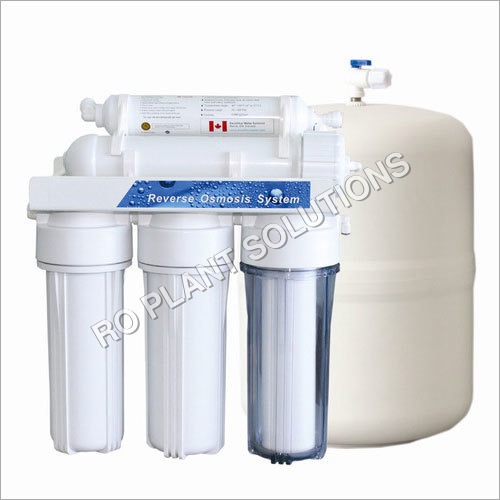
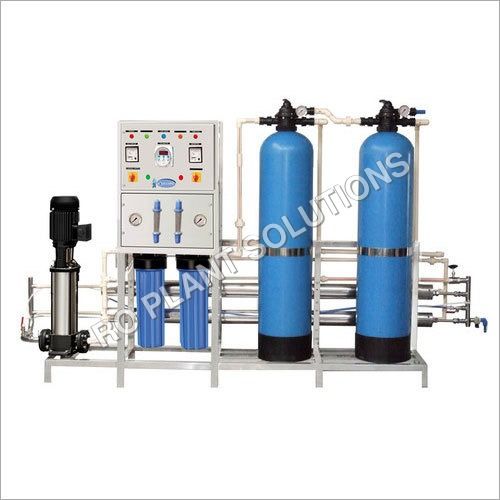
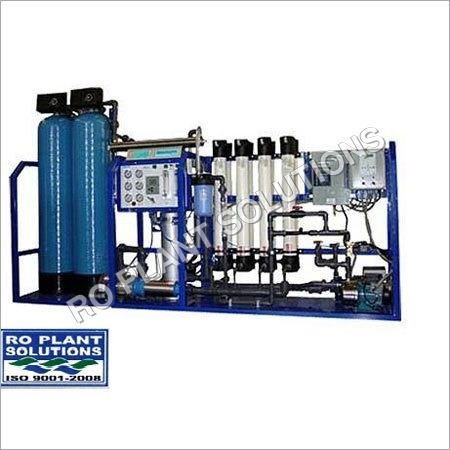
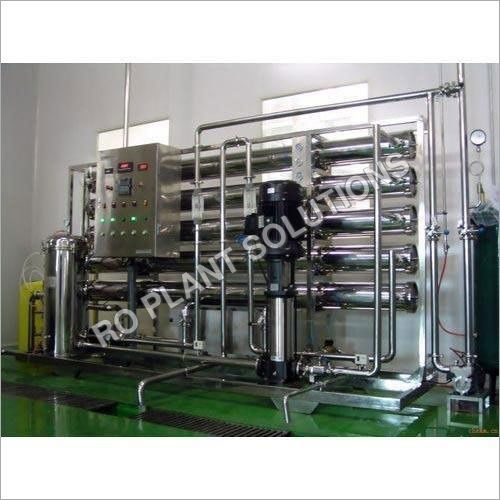
Being client centric organization, we are occupied in providing a wide range of Reverse Osmosis Systems. These products feature improved water purity, low energy consumptions and minimal Co2 emission. The offered product is widely application in hospitals, laboratories, industries, etc. It is generally used in different types of industries to remove harmful contaminants like solids, metal traces, bacteria and various others. In addition to this, the offered Reverse Osmosis Systems are offered for our valuable customers at economical prices.
Reverse Osmosis Systems
Reverse Osmosis Systems offered by us are built for specific effluent treatment based applications. These provide assured recovery of 80% or more as well as provide necessary power savings. Further, these are also cost effective alternate to evaporator and can tolerate high residual COD that is more than 3000 Mg/l in RO feed water. Its recyclable permeate is also of the highest quality as well as it has extended membrane life, which lasts more than 7 years.
Reverse Osmosis Systems Features:
Achieving Zero Discharge: Zero Discharge is the want of today that ensures no treated effluent is discharged to the ground.
The two main systems required to achieve this are:
- Reverse Osmosis
- Evaporator
All major industries have effluent treatment plants. We deliver them Phase III technology based treatment systems. This technology is based on innovative way of making ETP work together as it plays an important role in the treatment of effluents.
The following five steps are included in our preparation of effluents for treatment in RO:
- Characterize all effluents that are produced on site
- Implement well defined waste minimization program for reducing volume & strengths of effluents
- Incorporate in-process conditioning & treatment, where appropriate
- Determine & install segregation facilities to tailor treatment options
- Optimize performance of ETP-Phase III Technologies
- Install RO for treated effluent to recover process water
Reverse Osmosis Systems RO membranes:
These are designed to handle only raw water and allow effluents be treated to get the best possible quality of raw water. The performance of ETP plant also plays a very important role in reducing fouling of the membranes. We offer single RO plant that can handle both effluent & raw water, eliminating need for 2 RO plants (1 for raw water & another for effluent.
Reverse Osmosis Systems Evaporator Crystallize for converting RO reject to salts:
The last step in achieving Zero Discharge is evaporator to evaporate reject into salt. The main twin problems are solved in evaporator are corrosion, fouling of heat exchanger tubes and energy requirement to evaporate water. We are also engaged in providing clients with a quality-approved range of Reverse Osmosis Systems that are made available to the clients in varied sizes and specifications. Parts and components used in these systems are of high quality. Assembled onto a compact frame, the RO systems offered by us are reckoned in the market for their reliable performance. We can manufacture these R.O. systems in accordance with the requirements of customers.
Specification
|
Number of Membranes in RO
|
1
|
|
Material of Construction
|
FRP
|
|
Automatic Grade
|
Automatic
|
|
Max Water Recovery Rate
|
50-55 %
|
|
Chiller Cooling Capacity (Tons)
|
1 ton
|
Efficient Water Purification TechnologyOur reverse osmosis systems utilize high-performance membranes from renowned global brands, ensuring maximum contaminant removal and reliable water quality. The advanced PLC control panel optimizes system operations, reducing manual intervention and enhancing overall process efficiency.
Comprehensive Pretreatment and Cleaning SolutionsIntegrated with sand, carbon, and softener pretreatment modules, these systems efficiently manage water hardness and organic content, extending membrane life. The available automatic and manual CIP cleaning options keep the system running smoothly, minimizing downtime and maintenance costs.
Robust Construction for Demanding EnvironmentsConstructed using corrosion-resistant SS304/SS316 and FRP materials, our RO systems feature a polished or powder-coated finish. The skid-mounted design ensures easy installation and long-term durability, while service provisions include on-site installation and commissioning for seamless implementation.
FAQs of Reverse Osmosis Systems:
Q: How does the PLC control panel improve the operation of the reverse osmosis system?
A: The PLC control panel automates key system functions, allowing for precise monitoring and control of processes such as flow rates, pressure, and cleaning cycles. This reduces manual intervention, increases efficiency, and enables quick response to operational changes.
Q: What type of pretreatment is required before using the RO system?
A: Pretreatment is essential, and our system offers sand, carbon, and softener filters to remove particulate matter, reduce organic contaminants, and minimize water hardness. Proper pretreatment protects the membranes and enhances the overall performance and longevity of the RO unit.
Q: When should automatic or manual CIP cleaning be performed on the RO system?
A: Cleaning-In-Place (CIP) should be conducted according to feed water quality and system usage, typically when there is a decline in performance or increased membrane fouling. Automatic CIP simplifies routine cleaning, while manual CIP allows targeted maintenance as needed.
Q: Where can these reverse osmosis systems be installed?
A: Our RO systems are suitable for installation in a wide range of sites, including industrial plants, commercial buildings, and institutional facilities. The versatile skid-mounted design and on-site commissioning service ensure efficient setup in borewell, municipal, or river water environments.
Q: What is the process flow for this reverse osmosis system?
A: The treatment sequence starts with pretreatment (sand, carbon, softener), followed by cartridge and membrane filtration. High-pressure pumps drive water through the RO membrane, achieving TDS reduction and producing purified water. Reject water is discharged via a dedicated outlet.
Q: How does this system benefit users in terms of water purity and efficiency?
A: The system delivers up to 99.5% purity with TDS removal efficiency up to 95% and recycle rates up to 75%. Users benefit from reduced maintenance, lower energy consumption, and reliable, high-quality water supply suitable for sensitive industrial and commercial processes.






 Send Inquiry