Product Description
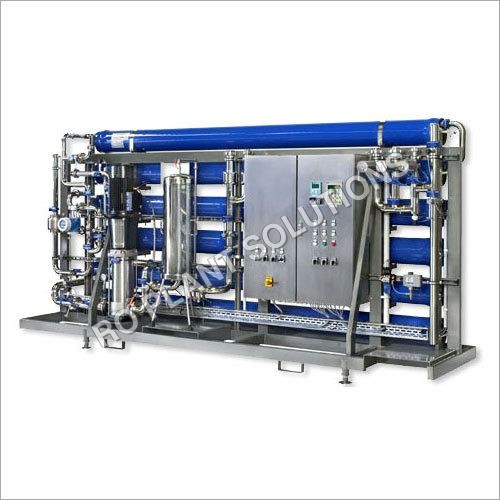
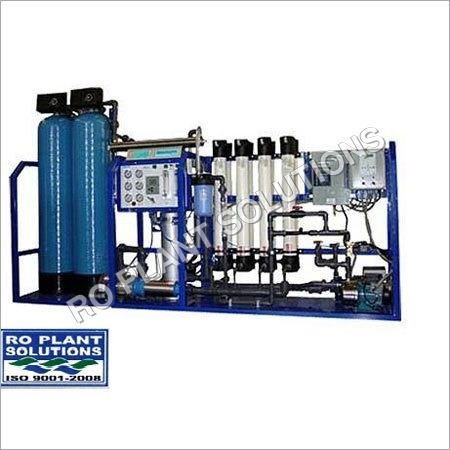
Clients can avail the offered range of Industrial Reverse Osmosis Plant from us. It is a compact unit with robust mild steel powder coated frame. This is equipped with an on-line device to monitor the treated water quality. It has built in safety features to protect high pressure pump & membranes. Low maintenance, effective performance, longer service life and corrosion resistant finish are some of the features of our offered Industrial Reverse Osmosis Plant.
Features:
- Tough construction
- Longer service life
- High performance
Specification
| Material of Construction | Stainless Steel |
| Number Of Filtration Passes | 4 |
| Chiller Cooling Capacity (Tons) | 2 ton |
| Installation Type | Completes Civil work with Installation |
Innovative Membrane TechnologyUtilizing Thin Film Composite (TFC), spiral wound membranes, this RO plant is designed for optimal water purification, delivering superior rejection of dissolved solids. The robust membrane construction ensures long-lasting performance, reduced fouling, and high operational efficiency for industries requiring consistently pure water.
Comprehensive Multi-stage PretreatmentA multi-grade sand filter, activated carbon filter, and micron filter work in unison to protect the RO membranes from contaminants. This detailed pretreatment process extends membrane life, reduces fouling, and enhances overall system stability, ensuring consistent purity and reduced maintenance requirements.
Automated Operation & Flexible ControlEquipped with a PLC-based control panel featuring automatic flushing, the system offers user-friendly automation, minimal manual intervention, and precise process monitoring. This reliable control setup helps optimize efficiency while preventing membrane clogging for maximum longevity and consistent output.
Built for Industrial DemandDesigned for versatility, this plant is suitable for borewell, municipal, groundwater, or surface water and comes in capacities from 100 to 10,000 LPH. The rugged, skid-mounted frame offers corrosion resistance and ease of installation, while its low noise operation and energy efficiency further boost its appeal for industrial environments.
FAQs of Industrial Reverse Osmosis Plant:
Q: How does the industrial reverse osmosis plant purify water to achieve up to 98% TDS removal?
A: The plant uses advanced Thin Film Composite (TFC), spiral wound membranes that filter dissolved solids at pressures between 820 bar. With a comprehensive pretreatment systemincorporating sand, activated carbon, and micron filtersit ensures only prefiltered water reaches the RO membranes, maximizing TDS removal.
Q: What types of pretreatment are included, and why are they important?
A: The system includes sand filters, activated carbon filters, and micron filters as pretreatment stages. These remove large particulates, organic contaminants, chlorine, and fine suspended solids from feed water before it reaches the membranes, protecting them from fouling and extending their service life.
Q: When is disinfection used in this plant, and which methods are available?
A: Disinfection is an optional final step, especially recommended for sensitive applications. The plant supports UV, silver ion, or ozone-based disinfection methods, which effectively neutralize microorganisms and ensure microbiological safety of the purified water.
Q: Where can this RO plant be installed and what water sources are suitable?
A: The plant is designed to be skid-mounted for flexible installation in industrial settings. It handles borewell, municipal, groundwater, or surface water sources, accommodating diverse industrial water purification needs.
Q: What is the process flow from source water to purified output in this RO plant?
A: Source water enters first through multi-stage filtration (sand, activated carbon, micron), then passes to the high-pressure RO membranes for dissolved solid removal. Treated water exits the system with a typical conductivity of less than 10 S/cm, while concentrate stream is discharged via a separate reject outlet.
Q: How does the PLC-based control panel enhance system operation and maintenance?
A: The PLC-based control automates key processes, including flushing and monitoring of critical parameters. This reduces the risk of membrane fouling, ensures consistent operation, and allows for quick diagnostics and minimal manual input.
Q: What are the main benefits of using this industrial RO plant for applications such as boiler feed or food and beverage processing?
A: Key benefits include robust construction, energy efficiency, high purity water output, adjustable pH levels, and dependable after-sales service. The systems versatility and reliable performance make it ideal for stringent industrial applications requiring low conductivity and high recovery rates.






 Send Inquiry