Product Description
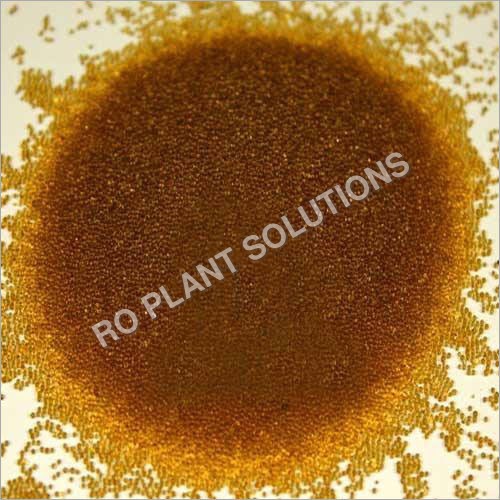
Keeping track with market development, we are engaged in providing an Ion Exchange Resin that is extensively used for removing of calcium, magnesium, iron and manganese salts from water. Apart from this, provided resin is also used for purification of sugar. Our offered resin is valued for precise composition, enhanced shelf life, free from impurity and safe to use. Our offered resin is quality examined by our adept professionals as per the set quality norms before delivering to market. Moreover, this Ion Exchange Resin is available in different packing options at market leading prices.
Features:
- Used in separation and purification processes
- Longer shelf life
- Accurately composed
Specification
| Specific Gravity | 1.27 |
| Usage | Water Treatment |
| Pack Type | HDPE Bag |
| Pack Size | 25L |
Key Applications and VersatilityThis ion exchange resin is widely utilized across water treatment systems, chemical processes, the pharmaceutical sector, and the food industry. Its stability over the entire pH scale and high capacity ensures effective removal or exchange of ions, meeting diverse industry needs. Whether purifying water or processing ingredients in pharmaceuticals and food production, the resins adaptability sustains operational efficiency.
Superior Chemical and Thermal StabilityEngineered to withstand rigorous operating conditions, the resin remains effective across temperatures up to 120C. Its uniformity coefficient ( 1.7) enhances performance consistency, while a moisture content of 50-60% maintains structural integrity during extended operations. The combination of Na+, H+, and Cl- forms allows users to select the most suitable ion form for their specific requirements.
FAQs of Ion Exchange Resin:
Q: How is this ion exchange resin typically used in water treatment applications?
A: The resin efficiently removes unwanted ions, such as calcium or magnesium, from water through ion exchange processes. It can be used in both softening and deionization systems to enhance water purity, making it suitable for municipal, industrial, and process water treatment applications.
Q: What benefits does the resin offer for food and pharmaceutical industries?
A: Its high purity (99%) and food-grade compliance ensure safe application in purification processes for food ingredients and pharmaceutical products. The resin provides consistent ion exchange capacity, helping meet stringent regulatory standards and improve end-product quality.
Q: When should the resin be replaced?
A: Typically, the resins efficacy diminishes over time or after repeated cycles. Replacement is recommended when there is a decline in exchange capacity or breakthrough of target ions, usually after several regeneration cycles or close to the 2-year shelf life.
Q: Where should the resin be stored to maintain quality?
A: Store the resin in cool, dry, and well-ventilated areas in its original PP bags or HDPE drums. Avoid exposure to direct sunlight or extreme conditions to preserve its physical and chemical properties during the 2-year shelf life.
Q: What is the recommended process for regenerating spent ion exchange resin?
A: Regeneration involves flushing the resin with appropriate regenerants: for cation exchange forms, acids like HCl; for anion forms, bases such as NaOH are used. Carefully follow industry practices to prevent resin fouling and maintain effectiveness.
Q: What makes the resin suitable for diverse pH environments?
A: With a pH operational range from 0 to 14, the resin endures both acidic and alkaline conditions without compromising its structure or performance. This broad compatibility enables its use in a wide variety of industrial and laboratory settings.





 Send Inquiry