Product Description
Reverse Osmosis Plant
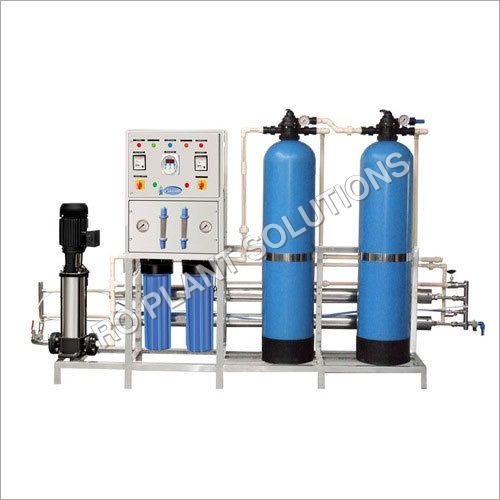
We introduce ourselves as an eminent manufacturer and supplier of Reverse Osmosis Plant. The offered reverse osmosis plant is designed with superior quality components and the latest technology under the supervision of adroit professionals. In addition to this, provided reverse osmosis plant is tested on various quality parameters. Our provided reverse osmosis plant is available in diversified specifications and designs as per the demands of the clients.
Reverse Osmosis Plant Features:
- Rigid construction
- High strength
- Easy installation
Specification
| Material of Construction | Stainless Steel |
| Installation Type | Complete Civil work with Installation |
| Automation Grade | Automatic |
| Plant Application | Industrial RO Plant |
| Number of Filtration Passes | 5,2,3,4 |
| Chiller Cooling Capacity | 0.5 ton,1.5 ton,2 ton,1 ton |
Advanced Multi-Stage FiltrationThe RO plant utilizes multiple filtration stages, including sand, carbon, and micron filters, followed by a high-quality polyamide thin-film composite membrane. This robust process efficiently removes suspended solids, chlorine, organics, and microscopic impurities, ensuring optimal membrane performance and excellent water quality for industrial and commercial needs.
High Recovery and Energy EfficiencyOur system offers a remarkable water recovery rate ranging from 40-70% based on feed water quality, with a recycle rate up to 70%. It operates with power consumption between 2-10 kW and features energy-efficient components. The plant is engineered for low resource wastage and reduced operational costs, maximizing output while minimizing environmental impact.
Custom-Built Robust DesignConstructed with mild steel powder-coated or stainless steel skid frames, the plant provides exceptional durability, corrosion resistance, and adaptability. Its modular and containerized design ensures flexibility, easy installation, and secure performance, making it suitable for diverse water sources and fluctuating demands across India.
FAQs of Reverse Osmosis Plant:
Q: How does the reverse osmosis plant achieve high purity water?
A: The plant employs a combination of pre-treatment stages (sand, carbon, and micron filters) followed by a polyamide thin-film composite membrane. This multi-stage filtration effectively removes particles, chemicals, dissolved solids, and microorganisms, delivering water with conductivity below 10 S/cm and a purity level of up to 99%.
Q: What are the main benefits of using a PLC-based control panel in this RO plant?
A: The PLC-based control panel enables automated, precise control of the treatment process, enhancing operational safety, consistency, and ease of monitoring. Automation reduces human error, supports real-time system adjustments, and minimizes manual intervention for improved reliability.
Q: Where can this RO plant be installed, and what water sources does it support?
A: This RO plant is designed for industrial and commercial settings and can be installed wherever high-capacity purified water is needed. It efficiently processes various water sources, including borewell, tap, and river water, making it suitable across diverse geographical locations in India.
Q: What is the typical recovery and recycle rate of this system?
A: Depending on the feed water quality, the systems recovery rate ranges from 40% to 70%. Additionally, it features a recycle rate of up to 70%, which allows significant water reuse and reduces operational costs through efficient resource management.
Q: How is installation and maintenance handled for this plant?
A: The plants skid-mounted or containerized design ensures a streamlined installation process. Routine maintenance is simplified due to easy-to-access filters and components, and automated controls provide alerts for timely servicing, resulting in reduced downtime and operational efficiency.
Q: What operational conditions does the plant support in terms of temperature and pressure?
A: The RO plant is designed for robust performance, functioning efficiently within an inlet pressure range of 2-5 bar and operational temperatures between 5C and 45C, making it adaptable to diverse environmental conditions.
Q: When should the membranes or filters be replaced?
A: The replacement schedule depends on feed water quality and system usage. Typically, pre-filters require periodic checks and replacement every 3-6 months, while RO membranes usually last 1-3 years with regular maintenance and proper pre-treatment. The automated system also notifies users when maintenance or replacement is due.






 Send Inquiry